After finishing this Unit 3 project, I started to think more seriously about how to present my work in a professional way. In the past, I often focused on finishing the project itself. However, this project made me realise that showing the process is also very important, especially for a group animation project.
Because this was a group project, I need to make my individual contribution clear. The final film is the result of teamwork, but my showreel and portfolio should show what I personally worked on. My main work included character design, 2D visual development, storyboard, animatic, interior design, some visual effects, compositing and my own one-minute animation section. In my portfolio, I want to organise these parts clearly so that the viewer can understand my role.
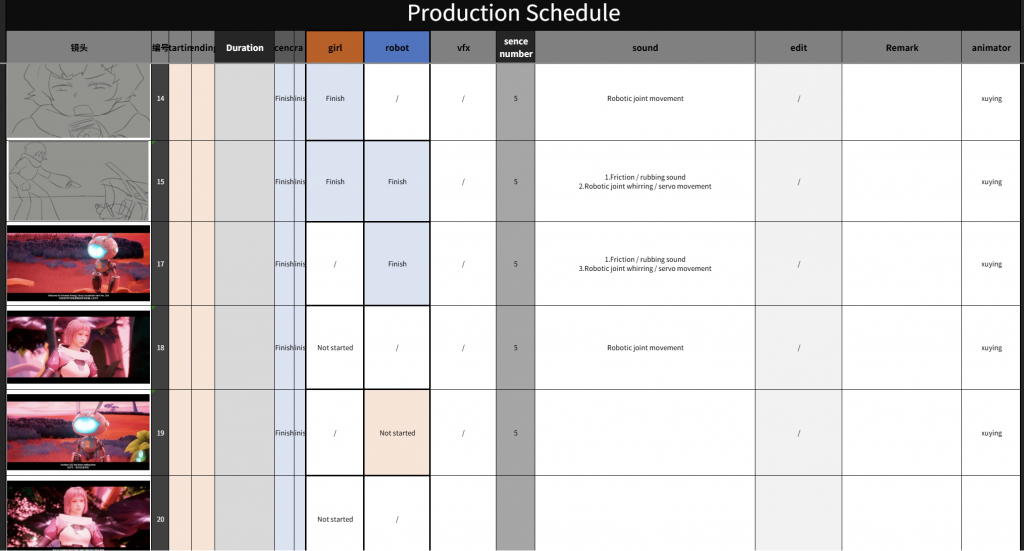
For my showreel, I do not want to only show the final shots. I think it is more useful to show the process behind the work. For example, one important shot in my project was the scene where the traveller reacts in fear. This shot can show my workflow clearly: first I made 2D sketches, then I placed them into the animatic, then I rebuilt the action in Unreal Engine, and finally I adjusted the body movement and details. This kind of breakdown can show how I think through an animation problem.
I also want to include my character design work in the portfolio. The space traveller design changed many times during the project. At first, I looked at real spacesuits and tried to understand the helmet, gloves, joints and equipment. Then I tested different shapes and details. Later, I simplified some parts because the design needed to be clear in motion and easier for 3D production. This process is important because it shows that character design is not only about making a nice image. It also needs to work for animation.
For the animatic and storyboard section, I want to include selected examples instead of every screenshot. I will show the most important changes, such as how I tested pacing, camera angles and shot continuity. I learned that too many fast cuts can make the scene confusing, especially in 3D animation. Showing these changes can help explain how the project developed before production.
I also plan to include visual effects and compositing examples. I used different tools for different purposes, such as Clip Studio Paint for drawing, Illustrator for graphic elements, Unreal Engine for 3D space and effects, and After Effects or editing software for final adjustment. In the portfolio, I can show screenshots of my process and explain why I used each tool.
For my professional preparation, I still need to improve my CV, showreel and online portfolio. I want my showreel to be short, clear and honest. If a shot was made by a team, I need to label my own role. I can add simple text such as “Character animation by me”, “Storyboard by me”, or “Compositing support by me”. This is important because it makes my contribution clear and professional.
My next step is to collect all my best materials and organise them into three parts: final work, process work and professional materials. The final work will show the finished animation. The process work will show sketches, animatic, breakdowns and software screenshots. The professional materials will include my CV, showreel link, portfolio link and contact information.
This project helped me understand that a portfolio is not just a collection of finished images. It should also show how I think, how I solve problems, and how I develop an idea from early sketches to final animation. This is the kind of portfolio I want to build for future opportunities.
Leave a Reply